Painted Seamless Patterns: The Hidden Engine of Everyday Design
You've seen them everywhere, perhaps without even realizing it. That elegant wallpaper on a boutique's website, the vibrant backdrop of a social media post, the cozy textile print on a promotional mug, or the subtle texture on a book cover. These aren't just random decorations; they are often the result of a specific, powerful design resource: painted seamless patterns.
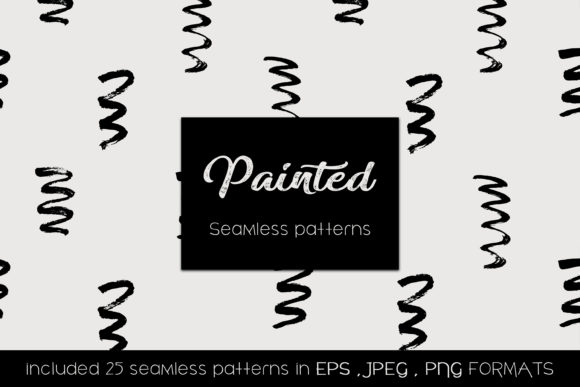
What exactly are painted seamless patterns? At their core, they are digital or physical artworks created to repeat infinitely without visible seams or breaks. The "painted" aspect means they carry the distinctive touch of an artist—textured brushstrokes, watercolor bleeds, the grain of pencil, the splatter of ink. This human-made quality separates them from sterile, computer-generated vectors. When these artistic patterns tile seamlessly, they become a versatile design asset, a roll of digital wallpaper that can cover any surface without awkward edges or obvious repetition.
Why a Hand-Painted Touch Matters in a Digital World
In an era of crisp logos and flat design, a painted pattern introduces warmth and personality. It feels authentic and approachable. For a small business owner crafting an online store, using a painted seamless pattern with soft watercolor florals on their site background can instantly make their brand feel more artisan and less corporate. A blogger writing about rustic cooking might use a pattern of painted wooden grains to frame their photographs, creating a cohesive, atmospheric experience that resonates with their readers. The pattern isn't just decoration; it's a non-verbal communicator of style and values.
The Unseen Workhorse for Creators and Entrepreneurs
Consider the practical reality of a freelance graphic designer working on a tight deadline for a client's product packaging. They need a unique background that conveys "organic" and "handcrafted." Scouring for stock photos might not fit, and creating a completely custom illustration from scratch for every package variation is time-prohibitive. Here, a well-chosen painted seamless pattern of herbal sketches or textured linen becomes the solution. The designer applies it across multiple packaging mock-ups, ensures it tiles perfectly, and the client gets a cohesive, premium look without the cost of unlimited original art. The pattern acts as a scalable design component.
For entrepreneurs launching a brand, these patterns solve foundational visual problems. Imagine you're starting a line of children's educational apps. Your brand needs to be playful, trustworthy, and engaging. A set of painted seamless patterns featuring friendly animal doodles or playful alphabet scribbles can be used across your app interface, your marketing website, your printable PDF worksheets, and even your merchandise like t-shirts or notebooks. This creates instant brand recognition and a unified world for your audience to enter. You build a visual ecosystem from a single, versatile asset.
Real Applications Beyond the Screen
The use cases extend far beyond websites and apps. Educators and content creators find immense value in painted seamless patterns. A teacher preparing a visually engaging presentation on medieval history might use a painted parchment or old map pattern as a slide background, setting the tone before any text appears. A YouTuber creating DIY craft videos could use a pattern of painted paint splatters or craft tools as a border in their video editing, subtly reinforcing their channel's theme. The pattern provides context and professional polish without demanding extensive video editing skills.
In the physical world, the digital file of a painted seamless pattern is the starting point. Hobbyists and small-scale manufacturers use these patterns for print-on-demand services. A pattern of painted geometric shapes could become the design for a phone case, a tote bag, or a throw pillow. Because the pattern is seamless, it can be printed on fabric or large surfaces without worrying about mismatched edges. This bridges the gap between digital art and physical product, enabling creators to monetize their aesthetic without needing industrial design expertise.
Choosing the Right Pattern for Your Real Need
Before you download or purchase a painted seamless pattern, pause to consider your actual project outcome. The pattern's style must align with the emotional tone you want to set. A pattern of bold, graffiti-style painted marks might energize a sports brand but undermine a legal consultancy's website. Think about technical requirements: will this pattern be used on a large-format print? Ensure its resolution is high enough so it doesn't pixelate when expanded. Will it be used on a mobile app? Consider how the detail might look on a small screen—sometimes a simpler, less busy pattern is more effective.
Also, consider the licensing. Many painted seamless patterns are available under licenses that allow commercial use, which is crucial for entrepreneurs and businesses. Always verify this. If you're a blogger using a pattern for your personal site, a personal-use license might suffice, but if you plan to print it on products for sale, commercial rights are essential. This due diligence prevents future legal hurdles and protects your project.
The Subtle Power in Marketing and Branding
For marketers and publishers, painted seamless patterns offer a tool for creating differentiation. In a crowded digital space, an email newsletter with a custom, painted pattern header feels more personal and less templated than a generic block-color design. It can increase engagement simply by standing out. An online magazine might use different painted patterns for different sections—a painted ink-blot pattern for the arts section, a painted graph paper pattern for the science column—creating intuitive visual navigation for readers.
This approach connects features to real outcomes: the "seamless" quality isn't just a technical spec; it means you can apply the pattern to a banner of any length without manual editing. The "painted" quality isn't just an aesthetic label; it means the pattern carries emotional resonance that a perfect geometric grid does not. You're choosing a tool that solves both a practical problem (covering space infinitely) and a human problem (creating a specific mood).
Everyday users, perhaps not professional designers, benefit from this accessibility. Someone creating a family reunion invitation in a basic word processor or online tool can import a painted seamless pattern of cheerful, painted confetti as a border, elevating a simple document into a celebratory keepsake. The pattern provides design competence they might not personally possess.
Integration into Your Creative Process
Think of painted seamless patterns not as finished art to be stared at, but as raw material for your own projects. They are the background layers, the textures, the foundational fills. A digital artist might use a painted charcoal texture pattern as a base layer for a larger digital painting, adding depth and realism. A web developer might implement a painted code snippet pattern very subtly in the footer of a tech blog, adding a thematic detail for the keen-eyed visitor. The pattern serves your vision; it doesn't replace it.
When you evaluate a collection of painted seamless patterns, look for cohesion and variety within a set. Does the artist offer patterns that work together? This allows you to maintain consistency while varying designs across different products or pages. Also, observe the pattern's tile sample—does it truly repeat without obvious seams when you look at a larger preview? This technical integrity is what makes the pattern a reliable tool rather than a frustrating asset that requires fixing.
Ultimately, painted seamless patterns are a bridge. They bridge the gap between unique artistry and scalable utility. They allow the handmade feel to exist in mass digital or print application. They empower non-designers to achieve professional-looking results and enable professionals to work faster and more cohesively. In your next project, whether it's a website, a presentation, a product, or a personal craft, consider starting with the surface, the background, the texture. A well-chosen painted seamless pattern might be the silent, powerful element that turns a good idea into a compelling visual reality.