How Scandinavian Christmas Digital Patterns Preserve Nordic Heritage in Modern Design
The quiet allure of a snow-dusted pine forest, the geometric dance of woven stars, the humble grace of a straw goat—these images have defined Nordic winter celebrations for centuries. Today, they find new life not on paper or cloth alone but through pixels and vectors, as Scandinavian Christmas digital patterns become essential tools for designers, educators, and creators worldwide. The transition from folk art to digital asset represents more than technological convenience; it signals a broader cultural preservation effort powered by modern workflows.
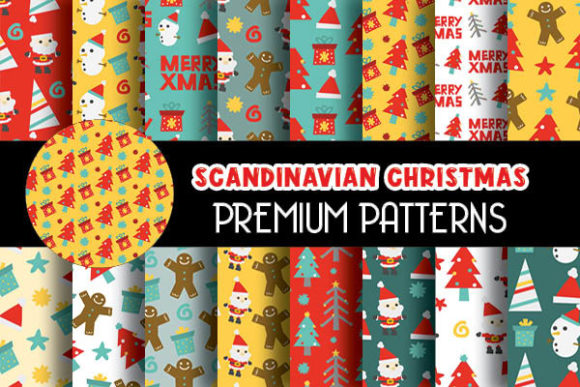
What makes these patterns so enduring is their deceptive simplicity. A reindeer silhouette rendered in clean lines, a repeating motif of hearts and snowflakes, or the classic dalahäst horse pattern carry visual weight far beyond their minimalist forms. When these elements are digitized as vector files, seamless repeats, or layered illustrations, they gain flexibility that traditional mediums could never offer while retaining the warmth and storytelling that make them recognizable across generations.
The Cultural Grammar Embedded in Nordic Winter Motifs
Understanding Scandinavian Christmas digital patterns requires recognizing the vocabulary they draw from. Nordic folk art, particularly styles like rosemaling from Norway, kurbits from Sweden, and the geometric knitting traditions of Iceland and the Faroe Islands, established a design language centuries before the first digital file was created. These traditions emphasized symmetry, natural forms, and a restrained color palette dominated by red, white, natural linen tones, and accents of pine green or icy blue.
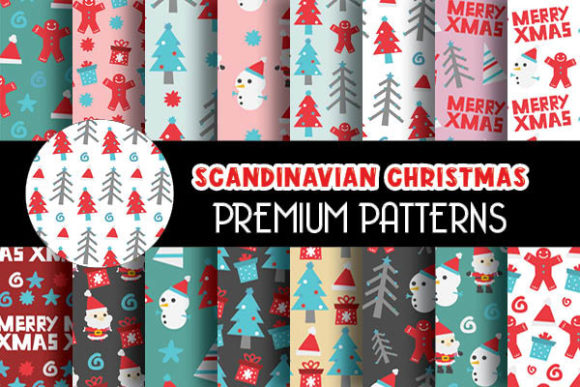
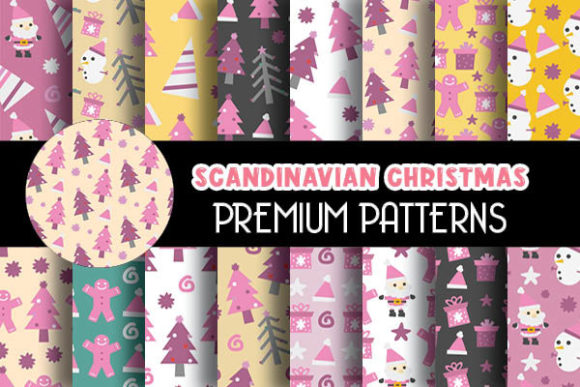
The tomte or nisse figure—a protective household spirit associated with the winter solstice—appears frequently in modern digital pattern collections. Designers working with Scandinavian Christmas digital patterns often reinterpret this figure through flat vector illustration, maintaining the pointed cap and bearded profile while adapting the rendering for contemporary applications like wrapping paper templates, fabric printing, or social media graphics. The result is a design element that carries folkloric weight without feeling dated or overly nostalgic.
Another recurring element is the snowflake, but treated through a distinctly Nordic lens. Rather than the elaborate Victorian-style snowflakes common in Anglo-American Christmas design, Scandinavian versions tend toward angular, star-like interpretations reminiscent of traditional paper cuttings and wood carvings. These geometric snowflakes translate exceptionally well to digital formats because their clean lines and predictable symmetry make them ideal for creating seamless repeat patterns in software like Adobe Illustrator or Affinity Designer.
Why Digital Formats Have Transformed Access to Nordic Design
The shift from physical to digital represents more than a change in medium. For business owners operating print-on-demand shops, access to high-quality Scandinavian Christmas digital patterns means they can offer products ranging from holiday pajama sets to ceramic ornaments without maintaining physical inventory or mastering traditional folk art techniques. A single seamless pattern file can generate revenue across dozens of product categories when licensed appropriately.
Educators and researchers benefit differently. Digital archives of Scandinavian Christmas motifs allow for comparative study across regions and time periods. A researcher examining the evolution of the Christmas goat motif—from pagan harvest symbolism through Christian adaptation to modern kitsch—can now access pattern libraries that span centuries of design iteration. Digital preservation ensures that even obscure regional variations remain available for scholarly work long after the physical artifacts may have degraded.
Hobbyists and home crafters have perhaps experienced the most dramatic transformation. Where once a person wanting to create Scandinavian-inspired holiday decor might need to learn embroidery, wood carving, or screen printing, they can now purchase digital pattern files and use cutting machines like Cricut or Silhouette to produce intricate paper snowflakes, vinyl decals, or iron-on transfers. The pattern itself—its proportions, its negative space, its cultural integrity—remains the creative foundation, but the barrier to execution drops significantly.
Surface Pattern Design for Textiles and Home Goods
The most commercially significant application of Scandinavian Christmas digital patterns lies in surface design. Textile manufacturers, independent fabric designers, and home goods brands license these patterns for seasonal collections that span table linens, throw pillows, bedding, curtains, and upholstery. The Nordic aesthetic carries associations of quality, coziness, and intentional living—concepts that align well with the growing consumer interest in hygge and lagom lifestyles.
What separates successful commercial patterns from merely decorative ones often comes down to the quality of the repeat. A pattern featuring stylized pine trees, reindeer, and snowflakes must tile seamlessly across yardage while maintaining visual interest without becoming chaotic. Digital tools allow designers to test repeats instantly, adjusting scale, density, and color balance before committing to production. This iterative capability reduces waste and allows for rapid response to market trends.
Stationery, Packaging, and Brand Collateral
Independent stationery designers and established brands alike turn to Scandinavian Christmas motifs for holiday card collections, gift wrap, and limited-edition packaging. The aesthetic communicates thoughtfulness and restraint—qualities particularly valuable in a season often associated with excess. A chocolate brand might wrap its holiday collection in paper featuring understated Nordic stars printed on kraft stock, signaling artisanal quality through design choices rather than explicit claims.
For event planners and corporate gift coordinators, digital patterns enable cohesive branding across multiple touchpoints. Invitations, menu cards, place settings, thank-you notes, and digital follow-ups can all draw from the same pattern family, creating a unified experience that feels curated rather than off-the-shelf. The ability to recolor pattern files means a company can maintain its brand palette while still participating in the seasonal visual language.
Digital Content and Virtual Experiences
The use of Scandinavian Christmas digital patterns extends well beyond physical products. Social media managers, content creators, and web designers use these patterns as backgrounds for quote graphics, story templates, email headers, and website seasonal updates. A food blogger sharing holiday recipes might overlay a subtle Nordic snowflake pattern on featured images, instantly signaling seasonal content without cluttering the composition.
Virtual event platforms have driven additional demand. As organizations host hybrid or fully remote holiday gatherings, digital backdrops, invitation graphics, and on-screen overlays featuring Scandinavian patterns help establish festive atmosphere in digital spaces. The clean lines and high contrast typical of Nordic design read especially well on screens, where overly complex patterns can become muddy or distracting.
Selecting and Working with Scandinavian Digital Assets
Not all digital pattern files are created equal, and understanding file specifications matters whether you are a professional designer or a first-time buyer. Vector formats like SVG, AI, and EPS offer infinite scalability without quality loss, making them ideal for applications that span from tiny gift tags to large-format banners. Raster patterns delivered as high-resolution PNG or JPG files work well for digital-only applications but may show pixelation when enlarged for print.
Licensing considerations deserve careful attention. Many Scandinavian Christmas digital patterns are sold under specific terms that distinguish between personal use, commercial use, and extended commercial use. A hobbyist creating gifts for family operates under different constraints than a business owner producing items for sale. Some pattern creators offer pod-friendly licenses explicitly permitting use on print-on-demand platforms, while others restrict such applications. Reading license terms before purchase prevents complications down the line.
Color customization capability varies significantly across products. Some digital pattern files arrive as fully editable layered vectors where every element can be recolored independently. Others are delivered as flattened images where color adjustments require more advanced Photoshop skills. Matching pattern colors to existing brand guidelines or project palettes may influence which file type makes sense for a given workflow.
Design Principles That Elevate Nordic-Inspired Pattern Work
Creating original Scandinavian Christmas digital patterns involves more than arranging reindeer and snowflakes in a grid. The most compelling patterns in this tradition observe several core principles that distinguish Nordic design from generic holiday kitsch.
Restraint in color stands as perhaps the most important guideline. Traditional Scandinavian holiday palettes rarely exceed three or four colors, with one dominant neutral grounding the composition. A pattern might use cream as its background, deep red for primary motifs, and touches of muted green for accent elements. This restraint creates breathing room that allows individual motifs to read clearly even at small scales.
Respect for negative space functions similarly. Where some design traditions fill every available inch with ornament, Scandinavian patterns often leave generous areas of background visible. This negative space becomes an active design element, shaping how the eye moves across the pattern and preventing visual fatigue during extended viewing. In digital terms, this translates to patterns with lower motif density that work well across large surface areas.
Geometric underpinning provides structural integrity. Even seemingly organic motifs like pine branches or reindeer often resolve into geometric relationships when analyzed. The angles of branches, the spacing between elements, and the overall rhythm of the repeat typically follow mathematical relationships that create harmony without rigidity. Digital design tools make achieving this precision straightforward, but the aesthetic judgment about which relationships feel natural rather than mechanical comes from studying traditional examples.
The Broader Cultural Conversation Around Digital Folk Art
The proliferation of Scandinavian Christmas digital patterns raises thoughtful questions about cultural ownership and authenticity. Nordic folk motifs emerged from specific communities with distinct histories, and their digitization for global commercial use inevitably strips some context. At the same time, the alternative—restricting these patterns to their regions of origin—would limit cultural exchange and potentially hasten the decline of folk traditions that thrive through adaptation and reinterpretation.
Many contemporary pattern designers address this tension by crediting their sources, distinguishing between faithful reproductions of historical patterns and original work inspired by tradition, and sometimes collaborating with cultural institutions or artisans from the communities whose visual heritage they draw upon. For consumers and designers using these assets, approaching them with curiosity about their origins rather than treating them as generic seasonal decoration represents a more respectful engagement with the material.
Museums and cultural archives have begun releasing digitized collections of historical Scandinavian textiles and paper crafts, making authentic reference material available to designers worldwide. These resources enable pattern creation rooted in genuine folk art rather than third-hand interpretations, raising the quality and cultural accuracy of the resulting digital assets.
Seasonal Trends and Year-Round Relevance
While Christmas drives peak demand for these patterns, the Scandinavian aesthetic enjoys year-round popularity in certain design sectors. The clean lines, natural themes, and restrained palettes characteristic of Scandinavian Christmas digital patterns adapt readily to non-holiday applications. A pattern of stylized pine trees works equally well for winter-themed products that extend from November through February, and geometric star motifs transition naturally into general celestial or folk art categories.
This extended relevance affects how creators approach pattern design. Rather than creating assets useful only during a six-week holiday window, many designers develop pattern families where Christmas-specific elements like Santa figures or nativity scenes exist alongside winter-generic elements like snowflakes, evergreens, and geometric borders. This approach maximizes the utility of each pattern collection while giving buyers more flexibility in how they deploy the assets across their product lines or seasonal calendars.
The growing interest in slow living, sustainable consumption, and handmade aesthetics—all values associated with Nordic culture—suggests that Scandinavian design language will continue resonating beyond holiday applications. Digital pattern creators who understand this broader context can build collections that serve Christmas demand while establishing year-round relevance for their design vocabulary.