The Enduring Journey of the Paisley: From Ancient Patterns to Modern Mandalas
You've likely encountered its distinctive, curved shape—a teardrop with a swirling, intricate interior—on fabrics, tattoos, wall art, or even phone cases. This iconic motif, known as the paisley, carries a history far richer and more ancient than its current status as a beloved ornamental pattern. Today, it often finds itself harmoniously integrated into the structured, circular designs of mandalas, creating a fusion of cultural symbolism and aesthetic beauty known as ornament paisley mandala patterns. This article explores this journey, unraveling the origins, significance, and modern relevance of this timeless design element.
Unraveling the Origins: The Buta and the Persian Pine
The story begins not in Paisley, Scotland, but in the ancient civilizations of Persia and India. The pattern's true ancestor is the 'boteh' or 'buta', a Persian word meaning "bush," "cluster," or "leaf." The design is believed to symbolize a cypress tree, a sacred plant in Zoroastrianism representing life and eternity. In its earliest forms, seen on artifacts from as early as 200 AD, it depicted a stylized floral spray or a growing plant, embodying themes of fertility and renewal.
From Persia, the buta traveled to India, where it flourished in Kashmir. Here, it became the central motif of the luxurious and famously intricate Kashmir shawls. Handwoven with painstaking detail, these shawls featured elaborate buta patterns, often meant to represent a pine cone or a palm shoot, continuing the connection to natural growth and prosperity. The shawls became coveted luxury items across Europe in the 18th and 19th centuries.
How Paisley Got Its Name
The pattern's common Western name is a tale of industrial adaptation. When imported Kashmir shawls became too expensive and desirable, European textile centers, notably the town of Paisley in Scotland, began mass-producing imitation versions. These cheaper, machine-woven shawls carried simplified versions of the buta pattern. Because these products were so strongly associated with the Scottish town, the motif itself became permanently known in the West as the "paisley." It's a fascinating case of a design's name being derived not from its origin, but from its point of popularized reproduction.
The Symbolic Heart of the Mandala
To understand the fusion, we must first look at the mandala. A Sanskrit word meaning "circle," a mandala is a complex, symmetrical geometric design that represents the cosmos, unity, and wholeness in Hindu and Buddhist traditions. It is a spiritual and ritual symbol, a tool for meditation, and a map for the journey from the external world to the inner center. Key characteristics include:
- Radial Symmetry: Everything emanates from and revolves around a central point.
- Concentric Layers: Designs are built in rings, guiding the eye inward.
- Sacred Geometry: Use of shapes and patterns believed to hold universal meaning.
In its traditional context, creating or contemplating a mandala is a mindful, purposeful act aimed at focusing attention, establishing a sacred space, and aiding in spiritual transformation.
The Fusion: Ornament Paisley Mandala Patterns
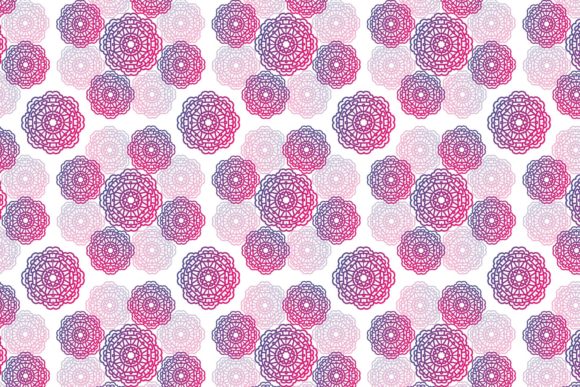
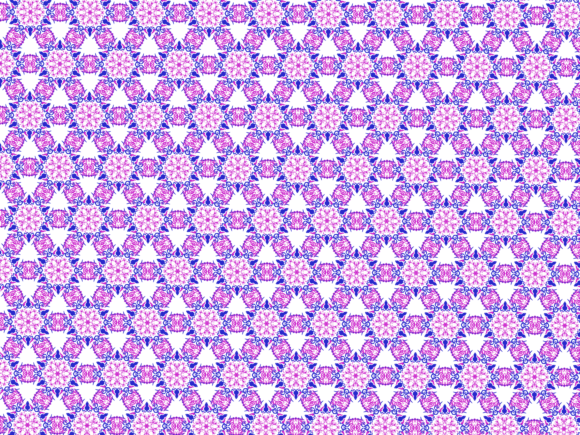
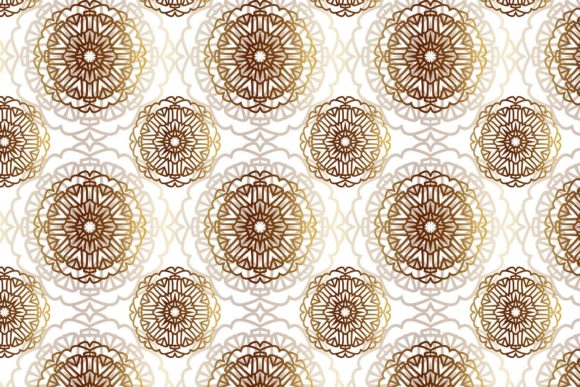
This is where ancient paths converge. Modern ornament paisley mandala patterns blend the free-flowing, organic symbolism of the paisley (growth, nature, eternity) with the structured, centering framework of the mandala (balance, cosmos, unity). The paisley shapes become the decorative elements within the mandala's concentric circles. They might:
- Fill the rings of a mandala, replacing simpler dots or lines with lush, detailed paisley teardrops.
- Form the outer border of a mandala, creating a flowing, vegetative frame.
- Even become the central focus itself, with smaller paisley elements radiating out from a large central boteh.
This fusion is less about strict religious symbolism and more about universal aesthetic and therapeutic appeal. It takes the paisley from its historical textile context and places it into a format designed for visual harmony and personal reflection.
Common Misunderstandings
A key assumption to clarify is that modern paisley mandalas are not typically religious artifacts in the Western context. While they borrow the form of sacred mandalas, their use is generally decorative, artistic, and therapeutic. They are appreciated for their beauty and the sense of calm their symmetry induces, rather than for specific Buddhist or Hindu doctrine. This makes them accessible and meaningful to a broad audience regardless of spiritual background.
Purpose and Significance in Modern Life
Why has this hybrid pattern found such a resonant place in contemporary culture? Its significance spans several key areas of modern life.
Creativity and Art Therapy
Drawing, coloring, or designing paisley mandalas is a popular creative and therapeutic activity. The process combines:
- Freeform Creativity: Designing the unique interior swirls of each paisley element.
- Structured Guidance: Following the mandala's circular framework provides a comforting constraint.
This balance makes it an excellent tool for stress relief, mindfulness, and artistic expression. Coloring books dedicated to such patterns are immensely popular, offering a digital-age antidote to anxiety through focused, low-pressure creativity.
Design and Branding
In visual design, ornament paisley mandalas offer rich texture and cultural depth. They are used in:
- Fashion: On clothing, accessories, and textile prints, blending Bohemian flair with geometric order.
- Interior Decor: As wall art, tapestry designs, or tile patterns to add intricate, focal-point beauty to a space.
- Brand Identity: Some companies use simplified versions in logos to convey growth, balance, and intricate care (often in wellness, artistic, or cultural sectors).
Technology and Digital Art
The digital realm has amplified the pattern's reach. Graphic designers use software to create incredibly complex, symmetrical paisley mandalas impossible to draw by hand. They appear as:
- Screen savers and digital wallpaper.
- Assets in video games and virtual environments.
- The basis for generative art, where algorithms create endless variations.
Furthermore, the pattern's details and symmetry make it a fascinating subject for studies in pattern recognition and computational design.
Practical Relevance: From Daily Activities to Personal Growth
Beyond broad categories, the pattern integrates into daily life in tangible ways.
Consider the act of coloring a paisley mandala page. It's a daily activity that promotes mindfulness, pulling attention away from scattered thoughts to the present task—choosing colors, filling shapes. It’s a practical tool for mental pause.
In home decor, a large paisley mandala artwork can serve as a room's centerpiece, its symmetry bringing a sense of order and calm to the living space. In personal fashion, wearing a paisley mandala print can be both a stylistic choice and a subtle, personal reminder of balance and growth.
For educators, these patterns can be used in art classes to teach concepts of symmetry, cultural history (linking to Persia, India, and Scotland), and the math inherent in radial design. They offer a cross-disciplinary bridge between art, history, and geometry.
Building a Broader Understanding
To truly appreciate ornament paisley mandala patterns, view them as a living dialogue between cultures and eras. They are:
- A historical narrative of trade, adaptation, and naming.
- A symbolic fusion of organic life (the paisley) and cosmic order (the mandala).
- A modern tool for decoration, creativity, and mental well-being.
Their journey from sacred Persian cypress to Scottish mill town, and finally into the structured cosmos of the mandala, showcases how human symbols evolve, travel, and find new meaning. They remind us that patterns are not just decoration; they are carriers of story, meaning, and human connection across time and geography.
Today, when you see a paisley mandala—whether on a screen, a shirt, or a colored page—you're seeing more than a beautiful pattern. You're witnessing a millennia-old symbol of growth, framed by a timeless structure for harmony, reinvented for contemporary eyes seeking both beauty and balance in a complex world.