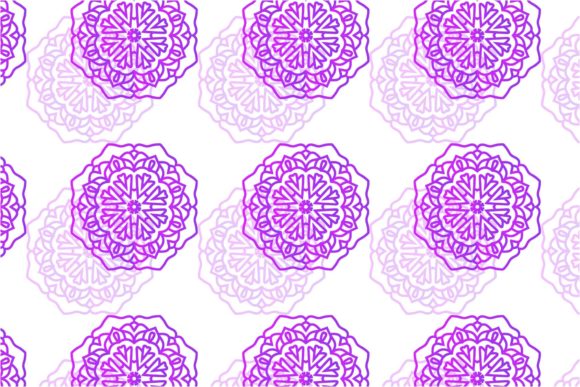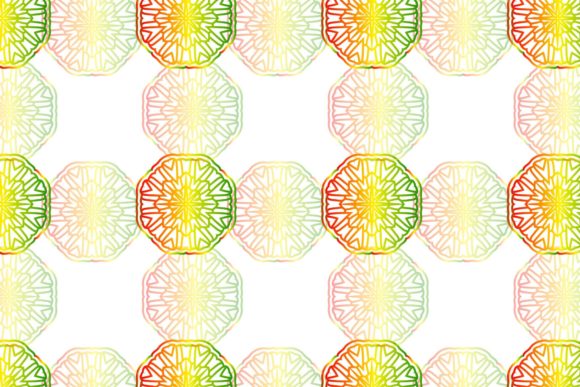
Understanding Patterns Mandala Flower Ornament for Creative Projects
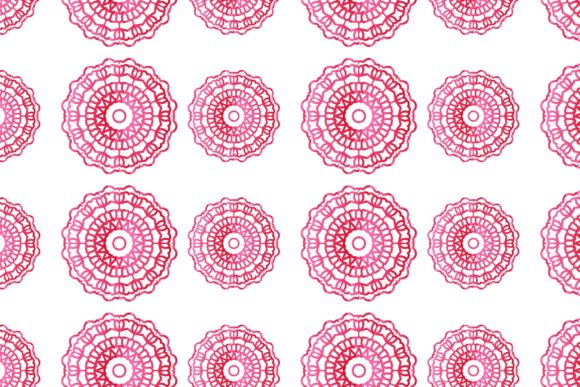
Decorating surfaces with intricate floral geometry can turn an ordinary item into something memorable. A Patterns Mandala Flower Ornament is exactly what it sounds like — a repeatable decorative design that combines the radial symmetry of mandalas with floral motifs, arranged as a seamless pattern. You see these used on fabric, stationery, wall art, digital backgrounds, packaging, and even laser engraving templates. The appeal is clear: they offer a lush, handcrafted look without requiring you to draw every petal from scratch.
But here is where things often go sideways. Many people grab the first free download they find, use it without checking basic technical details, and then wonder why the final output looks blurry, misaligned, or legally questionable. Whether you are a small business owner printing onto tote bags, a blogger designing a lead magnet, or a hobbyist personalising a planner cover, there are specific pitfalls that can waste your time and money. Let us walk through what actually matters when you choose and work with these ornaments.
What People Get Wrong Before They Even Start
One of the most common mistakes is assuming all Patterns Mandala Flower Ornament files are ready to use in any context. They are not. A pattern that looks crisp on a screen at two inches wide might disintegrate into a pixelated mess when stretched across a twelve-inch canvas. This happens because many free or low-cost downloads are raster images saved at a fixed resolution — often seventy-two dots per inch, which is fine for web display but completely inadequate for print.
The correction here is straightforward: before you commit to a file, identify your intended use. If you plan to print, you need a minimum of three hundred dots per inch at the final output size. If the pattern is vector-based — meaning an SVG, AI, or EPS file — you gain infinite scalability, which is a genuine advantage. Vector formats also let you easily recolor individual elements without losing sharpness. For digital work like website backgrounds or social media graphics, a high-quality PNG or JPEG at the exact pixel dimensions you need will serve you well, but avoid stretching small files.
When Resolution Assumptions Lead to Blurry Results
Imagine a stationery designer who purchases a lovely Patterns Mandala Flower Ornament set, intending to print it on A5 wedding invitations. The download contains a beautifully detailed JPEG. It looks perfect on the monitor. She places it into her design software, scales it slightly to fit the bleed area, and sends it to the printer. The printed invitations arrive with soft, fuzzy edges on the mandala petals and a general lack of crispness that cheapens the entire suite.
What went wrong? The original file was likely three thousand pixels wide at seventy-two DPI, which translates to about forty-two inches on screen. That seems huge until you realise that at print resolution, those same three thousand pixels only cover ten inches of sharp print. Scaling up for the bleed pushed the effective resolution below two hundred DPI. The fix would have been to source a vector version, or at minimum check the pixel dimensions and calculate the maximum print size at three hundred DPI before purchasing.
Overlooking Licensing Terms Can Cost You Later
Another oversight that trips up entrepreneurs and content creators involves usage rights. Many Patterns Mandala Flower Ornament downloads from stock sites or independent artists carry specific restrictions. A personal-use-only license means you cannot legally print the design on products you sell, even if you modified the colours. Some licenses forbid use in logo design or trademark registration. Others limit the number of physical items you can produce.
This is not a minor detail. I have spoken with small business owners who built entire product lines around a pattern they found online, only to receive a cease-and-desist notice because the license did not cover commercial manufacturing. The solution is simple but requires diligence: read the license document before you buy or download. Look for terms like commercial use, extended license, print-on-demand allowed, and unlimited runs. If the license language is vague, contact the seller and ask directly. Keep a copy of the confirmation. Treat this step as part of your business foundation, not an afterthought.
Choosing a Pattern That Fights Your Composition
Not every Patterns Mandala Flower Ornament works with every layout. A heavily detailed mandala with dense linework can overwhelm text placed on top of it, making readability suffer. Conversely, an airy, open floral ornament with large negative spaces might feel too sparse for a bold product label. The mistake is evaluating the pattern only in isolation — admiring it on a white screen — without testing it against your actual content.
Before finalising your choice, overlay sample text, logos, or other key elements. Check the contrast ratio. If the pattern competes with the foreground, you have a few practical options: reduce the pattern's opacity, apply a subtle colour wash behind your text, or select a complementary ornament from the same collection that has a quieter rhythm. Many pattern sets include multiple density variations for exactly this reason. Using the denser version for borders and the lighter version for full backgrounds is a reliable technique.
Colour Mode Confusion Between Screen and Print
A recurring source of frustration involves colour modes. Digital designs are created in RGB — red, green, and blue light mixing — which produces vibrant, luminous shades. Print production relies on CMYK — cyan, magenta, yellow, and black inks — which has a narrower colour gamut. When you take an RGB Patterns Mandala Flower Ornament file and print it without conversion, some colours shift. Electric purples turn muddy. Bright turquoises dull. The lush ornament you selected suddenly looks muted and lifeless on paper.
The fix depends on your workflow. If you have design software, convert the file to CMYK early and adjust colours to compensate for the shift. If you are working with a professional printer, ask whether they prefer to handle the conversion themselves — many do — and request a proof. For digital-only projects, stay in RGB and use sRGB colour space for the most predictable web display. Understanding this distinction before you invest in a full print run saves disappointment and expense.
Ignoring Seamless Tiling Quality
A pattern described as seamless should tile without visible boundaries. In practice, not all products live up to that promise. Some Patterns Mandala Flower Ornament files contain subtle misalignments at the edges, creating a grid-like seam when repeated across a large surface. This is especially noticeable on fabric, wallpaper, wrapping paper, and website tiles where the eye easily detects repetition artifacts.
You can test seamlessness by placing the pattern in a tiled preview and zooming out. Look for abrupt cut-offs in petal shapes, mismatched line weights at the edges, or colour inconsistencies that repeat in a grid. A properly seamless pattern will have elements that flow continuously across tile boundaries. If you find issues, check whether the creator offers a corrected version or consider commissioning a custom seamless repeat. For digital use, subtle seams can sometimes be masked with an overlay texture, but for physical products, the pattern must be genuinely seamless from the start.
Misunderstanding Scale and Repeat Size
Scale is one of those details that separates professional-looking results from amateur ones. A Patterns Mandala Flower Ornament designed with a two-inch repeat tile might look dainty and charming on a phone case but become overwhelmingly busy on a large wall tapestry. Alternatively, a pattern with a large ornate mandala as the primary motif might lose all recognisable detail when shrunk to fit a narrow bookmark.
Think about the typical viewing distance for your final piece. Textiles for clothing are viewed up close, so a smaller repeat often works. Home décor items like curtains or duvet covers are seen from several feet away, where a larger, bolder repeat reads better. Some pattern collections offer multiple scale options, which is a sign of a thoughtful creator. If your chosen file does not include scale variants, test it at different sizes in a mockup before committing to production.
Skipping the Pre-Purchase Checklist
When people rush to acquire a beautiful Patterns Mandala Flower Ornament, they frequently skip basic verification steps that would prevent later headaches. Here is a practical checklist to run through before you click purchase or download:
- File format: Is it vector or raster? Does that match your project needs?
- Resolution and dimensions: Will it deliver sharp output at your intended size?
- Colour mode: RGB or CMYK? Can you convert if needed?
- Seamless integrity: Have you tested the tile edges?
- License terms: Does it cover your specific use — personal, commercial, print-on-demand?
- Design density: Does the pattern complement or compete with your content?
- Scale flexibility: Can you adjust the repeat size without breaking the design?
Running through these points takes five minutes and can save you from unusable files, legal risk, or costly reprints. It also builds a habit of intentional selection rather than impulse grabbing based purely on visual appeal.
Falling for the Free Download Trap Without Inspection
Free resources are abundant, and many talented artists generously share their work. But not every free Patterns Mandala Flower Ornament file is safe or production-ready. Some are hosted on sites that bundle malware. Others are extracts from paid collections with stripped metadata, making it impossible to verify the license history. There have been cases where people unknowingly downloaded patterns that were scraped from a designer's portfolio without permission, putting them at indirect risk of infringement claims.
If you use a free file, source it from reputable platforms where creators have clear profile pages and stated licensing. Check comments or ratings. Look for a transparent history. If something feels off — if the download comes from a generic aggregator with no attribution — consider spending a modest amount on a verified commercial product instead. The peace of mind is worth far more than the few dollars saved.
Applying Ornaments Without Considering the Substrate
The surface you apply a Patterns Mandala Flower Ornament to matters enormously. A delicate line mandala can disappear on textured paper stock, while a bold, heavily filled floral pattern might crack when printed onto flexible materials unless the ink and substrate are compatible. People designing for laser engraving often make the mistake of using patterns with fine, disconnected details that burn away or merge under the laser beam.
Ask yourself about the physical interaction between design and material. Fabric absorbs ink and can soften fine details. Glossy surfaces reflect light and alter how subtle colour gradients appear. Wood grain introduces its own organic pattern that can clash with intricate mandala geometry. Test on a sample whenever possible. The most stunning screen pattern can disappoint if nobody checked how it actually renders on the final medium.
Practical Advice for Better Decisions
Build a shortlist of go-to sources you trust, whether that means independent designers on established creative marketplaces or subscription-based stock libraries with clear commercial terms. When you find a Patterns Mandala Flower Ornament you genuinely like, keep a note of the creator's name and store the license file alongside your project assets. This small organisational step saves frantic searching later if a client or platform asks you to verify usage rights.
Learn the basics of your design software's pattern handling. Tools like Adobe Illustrator, Affinity Designer, and even Canva offer pattern fill features that let you preview repeats, adjust scale, and change colour palettes on the fly. Investing an hour in learning these controls repays you with faster, more precise results and fewer export surprises. You do not need advanced skills to manipulate a pattern competently — just enough confidence to test what you have before you send it to production.
Lastly, remember that a Patterns Mandala Flower Ornament is a starting point, not a finished statement. The best uses often involve thoughtful modification — recolouring to match a brand palette, layering with subtle textures, or combining two ornaments from the same collection to create a custom look that nobody else has. This approach elevates your work beyond the off-the-shelf appearance and makes the final piece feel genuinely yours while respecting the original creator's contribution.