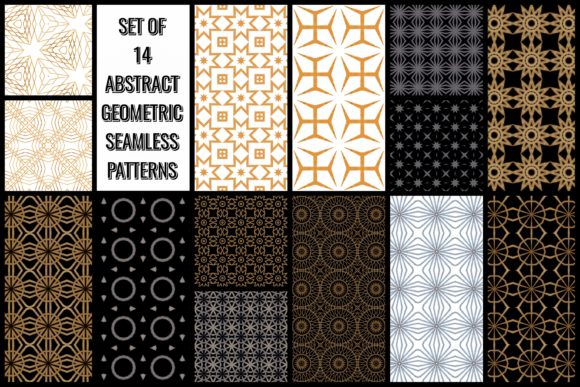
The Quiet Power of Abstract Geometric Seamless Patterns in Modern Visual Culture
Walk through any contemporary coworking space, scroll through a curated brand feed, or unwrap a premium product, and you will encounter them—repeating shapes, interlocking lines, and balanced compositions that feel both mathematical and deeply human. Abstract geometric seamless patterns have moved far beyond decorative afterthoughts. They now operate as foundational visual infrastructure across industries that range from tech startups to interior design studios. What makes them so enduring, and why are they suddenly everywhere again in such a refined, intentional way?
The answer lies partly in their versatility and partly in a cultural shift toward order, clarity, and modular thinking. These patterns, built from basic geometric forms that repeat infinitely without visible seams, offer a rare combination of flexibility and coherence. They can ground a brand identity, elevate a digital interface, or transform a physical space without overpowering the core message. For professionals navigating an increasingly chaotic visual landscape, that kind of reliability matters.
The Anatomy of a Seamless Geometric System
Before exploring why these patterns resonate so strongly, it helps to understand what separates a thoughtfully constructed geometric repeat from a simple tiled shape. A truly seamless pattern creates the illusion of an infinite field—no beginning, no end, no jarring breaks where one tile meets another. When executed well, the viewer cannot identify where the repeat cycle starts or stops. This demands precise mathematical alignment of edges, corners, and transitional zones.
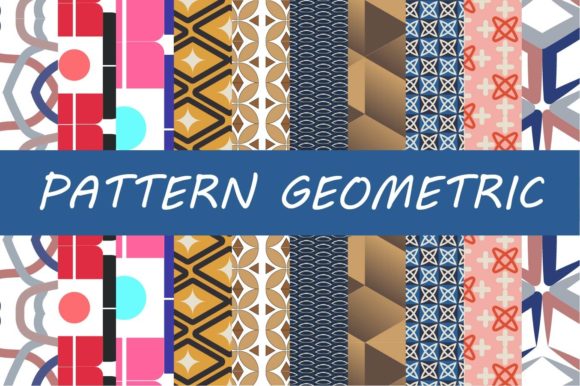
The vocabulary of these patterns typically draws from circles, triangles, squares, hexagons, lines, dots, arcs, and polygons arranged in rhythmic relationships. Some compositions embrace dense, interlocking complexity reminiscent of Islamic geometric art or mid-century textile design. Others lean minimalist, using sparse arrangements and generous negative space. Both approaches share a common DNA: they rely on proportion, repetition, and structural logic rather than representational imagery.
What distinguishes abstract geometric seamless patterns from their figurative counterparts is their refusal to depict recognizable objects. They do not show flowers, animals, or landscapes. Instead, they communicate through pure form—scale relationships, directional energy, density variations, and the subtle tension between order and surprise. This abstraction gives them remarkable endurance across changing aesthetic trends.
Why Visual Professionals Are Returning to Geometric Structure
During the maximalist wave of the late 2010s, many designers embraced chaotic collages, hand-drawn imperfections, and deliberately clashing elements. That pendulum has swung. Today, there is a noticeable appetite for visual systems that convey stability, precision, and intentionality. Brands want to signal that they are dependable. Creators want frameworks that adapt across platforms without constant redesign. Audiences, overwhelmed by information saturation, gravitate toward visuals that offer breathing room and clarity.
Abstract geometric patterns meet these needs with surprising depth. They are structured enough to feel dependable but abstract enough to avoid feeling corporate or sterile. A well-designed hexagonal lattice can feel technological on a SaaS dashboard, organic on a skincare label, and architectural on a conference backdrop—all from the same foundational design language.
This adaptability explains why the patterns appear across such diverse contexts. Tech companies use subtle geometric textures in app backgrounds to add depth without distracting from interface elements. Fashion brands apply bold repeats to packaging and textiles to create instant shelf recognition. Interior designers specify geometric wallcoverings and acoustic panels that make spaces feel contemporary without dating quickly. In each case, the pattern serves as connective tissue rather than the main event.
Digital-First Design and the Modular Mindset
The rise of digital product design has fundamentally reshaped how creators think about visual assets. Websites must scale from smartwatch screens to ultra-wide monitors. Apps need to load instantly on variable network speeds. Brand systems must stay consistent whether rendered on a billboard or a favicon. This environment rewards assets that are lightweight, scalable, and systematic—exactly the strengths of geometric repeat patterns.
Because these patterns are typically created as vector graphics or compact tileable images, they remain crisp at any resolution and impose minimal performance burdens. A single 500-by-500-pixel tile can generate an infinite background, keeping file sizes small and load times fast. For web developers, e-commerce managers, and product designers, that efficiency translates directly into better user experiences and improved Core Web Vitals scores.
Beyond technical performance, the modular nature of geometric patterns aligns with how modern design systems are built. Just as UI components snap together into cohesive interfaces, geometric pattern tiles function as repeatable visual modules. Designers can recolor, rescale, or recombine them to create variations while maintaining systemic harmony. This approach reduces production time and ensures brand coherence across touchpoints—a practical advantage that resonates deeply with lean creative teams and solo entrepreneurs alike.
The Intersection of Craft and Code
An interesting evolution has taken place in how abstract geometric seamless patterns are created. Historically, these designs emerged from meticulous hand-drafting on paper, requiring immense patience and geometric knowledge. The mid-century modern era brought screen printing and mechanical reproduction, democratizing access to patterned goods. Today, a new generation of creators moves fluidly between analog exploration and digital precision.
Some designers sketch shapes in notebooks, scan the results, and refine repeating structures in vector software. Others write code directly, using algorithms and procedural generation tools to create patterns that would be impractical to construct manually. Platforms like Processing, p5.js, and node-based editors in Blender allow creators to define geometric rules that generate endless variations. This hybrid workflow—part intuition, part computation—produces results that feel both organic and rigorously structured.
The availability of these tools has also lowered barriers to entry. Small business owners who lack formal design training can now access high-quality pattern libraries, modify parameters through intuitive interfaces, and generate custom geometric repeats for their brands. What was once a specialized craft requiring years of study has become more accessible, though genuine mastery still distinguishes exceptional work from generic output.
Psychological Resonance and the Appeal of Order
There is a deeper reason people respond to geometric patterns that goes beyond aesthetics or practicality. Humans are pattern-recognition machines. Our brains find satisfaction in detecting regularities, symmetries, and predictable structures. Abstract geometry taps into this cognitive wiring directly, offering a kind of visual resolution that feels instinctively pleasing.
Research in environmental psychology suggests that moderate visual complexity—structured enough to be comprehensible, varied enough to sustain interest—promotes calm focus. Spaces and interfaces that achieve this balance reduce cognitive load without inducing boredom. Geometric seamless patterns, with their blend of repetition and subtle variation, often hit this sweet spot. They provide the reassurance of order while the abstract nature prevents them from becoming monotonous.
This psychological dimension has practical implications. Healthcare environments are increasingly using geometric wall graphics and textiles to create soothing atmospheres without clinical sterility. Educational apps employ subtle geometric backgrounds to maintain visual interest without distracting from learning content. Workplace designers specify acoustic panels and flooring with geometric repeats to define zones while supporting concentration. In each context, the pattern does quiet cognitive work that supports the primary activity.
Contextual Applications Across Industries
Observing how different sectors deploy geometric seamless patterns reveals the breadth of their utility. In fashion and apparel, designers use them to create fabrics that feel timeless rather than tied to a single season. A well-proportioned diamond repeat or triangular tessellation can appear on swimwear, activewear, and formal accessories without feeling out of place. The abstraction prevents the pattern from becoming a novelty that fades with the trend cycle.
In branding and packaging, geometric repeats solve a common challenge: how to create visual distinctiveness without relying on literal imagery that might limit appeal across markets. A cosmetics line using a subtle hexagonal pattern can feel premium and contemporary whether sold in Tokyo, Berlin, or São Paulo. The geometric language transcends cultural references while still conveying intentionality and refinement.
For digital content creators, pattern backgrounds have become essential tools for social media graphics, presentation decks, and video overlays. The seamless nature allows cropping at any dimension without awkward edge effects. When a YouTube thumbnail, Instagram story, and newsletter header all derive from the same geometric system, the creator builds visual equity with every impression—even when viewers do not consciously register the pattern.
Architects and interior designers increasingly specify large-format geometric tiles, laser-cut metal screens, and acoustic felt panels that function simultaneously as spatial dividers and patterned surfaces. These applications push geometry into three dimensions, where light, shadow, and perspective animate the repeat in ways a flat screen cannot replicate. The pattern becomes an environmental experience rather than just a surface treatment.
Avoiding the Generic Trap
The accessibility of geometric pattern creation brings a genuine risk: sameness. When thousands of brands use variations of the same triangular grids and hexagonal meshes, distinctiveness erodes. The patterns that stand out tend to have a clear point of view—an unusual scale relationship, an unexpected rhythm break, a deliberate imperfection, or a compositional logic that rewards closer inspection.
The most compelling abstract geometric seamless patterns often emerge from specific constraints. A designer might limit themselves to equilateral triangles of only three sizes. Another might derive a repeat structure from a particular architectural detail observed in a historic building. These self-imposed boundaries generate coherence that arbitrary shape combinations cannot match. The resulting patterns carry an internal logic that viewers may not consciously analyze but intuitively feel.
Color choice also dramatically affects perception. The same geometric structure rendered in muted earth tones communicates something entirely different from a neon-on-black treatment. Thoughtful color application can shift a pattern from corporate to playful, from calming to energizing, without altering a single shape. Professionals who understand this leverage geometry as a constant while using color as a contextual variable.
Practical Guidance for Selecting and Using Geometric Patterns
For those evaluating ready-made patterns or commissioning custom work, several considerations can guide better decisions. First, consider the primary viewing context. A pattern destined for mobile screens needs adequate scale and contrast to remain legible at small sizes. One intended for large-format wallcoverings can afford finer detail that rewards close inspection without becoming visually noisy from a distance.
Second, examine the seam quality under magnification or at full resolution. Even patterns marketed as seamless can exhibit subtle banding, alignment drift, or compression artifacts. These flaws become visible when the pattern repeats across large areas and can undermine the professional polish of the final application.
Third, think about how the pattern interacts with content layered on top. Background patterns for text-heavy layouts need lower contrast and simpler geometry to maintain readability. Patterns used as hero elements can be bolder and more complex. The relationship between foreground content and background geometry should feel intentional rather than competitive.
Finally, consider the cultural and historical associations of specific geometric forms. Octagons and eight-pointed stars carry rich significance in Islamic art traditions. Certain spiral configurations evoke Celtic or indigenous visual heritage. Being aware of these resonances helps creators use geometry respectfully and meaningfully rather than as decontextualized decoration.
The Enduring Value of Geometric Thinking
Zooming out from practical applications reveals something broader about why abstract geometric patterns continue to captivate. They embody a way of thinking that values relationships over isolated elements. Every shape in a seamless repeat exists in dialogue with its neighbors. Changes to one component ripple through the entire system. This systemic awareness mirrors the interconnected thinking required to navigate contemporary challenges in business, technology, and society.
There is also something quietly optimistic about patterns that suggest infinite extension. A seamless geometric repeat implies that order can continue beyond the visible frame—that coherence is possible beyond what we can immediately perceive. In an era marked by disruption and uncertainty, that subtle suggestion carries weight, even when we do not articulate it.
The disciplines involved in creating and working with geometric patterns—observation, proportion, iteration, refinement—also serve as counterpoints to the speed-obsessed tempo of modern production. Genuinely excellent geometric design cannot be rushed. It rewards patience and attention, qualities that feel increasingly rare and valuable. The patterns that endure tend to be those where the creator invested time in understanding the underlying structure rather than simply arranging shapes until something looked acceptable.
For professionals, creators, and businesses navigating a visual culture that often prioritizes novelty over substance, abstract geometric seamless patterns offer a compelling alternative. They demonstrate that consistency need not mean boredom, that structure can coexist with creativity, and that timelessness emerges not from chasing trends but from understanding fundamentals. As screens proliferate, as brands multiply, and as attention fragments further, the quiet clarity of well-crafted geometry will likely only grow more relevant.