The Quiet Power of Seamless Gray Lace Patterns in Modern Visual Design
In an era saturated with bold colors and attention-grabbing visuals, a quieter aesthetic has been steadily gaining ground. Seamless gray lace patterns represent more than just a decorative element—they embody a shift toward subtlety, texture, and sophisticated restraint in visual communication. For designers, brand strategists, and content creators who understand that nuance often carries more weight than noise, these patterns have become an indispensable tool in the creative arsenal.
What makes a pattern truly seamless goes beyond technical repeatability. It speaks to how effortlessly a design element integrates into a larger composition without disrupting the viewer's experience. Seamless gray lace patterns achieve this by offering the intricate detail of traditional lacework while maintaining the neutrality that modern design demands. The result is a versatile asset that can move between industries, platforms, and applications without losing its relevance.
Understanding Seamless Gray Lace Patterns as a Design Asset
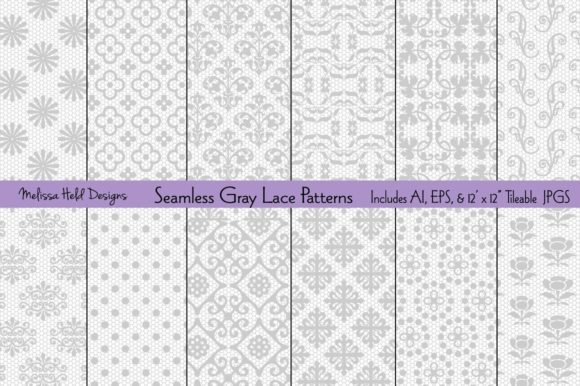
At their core, seamless gray lace patterns are digitally crafted textures that replicate the delicate, openwork appearance of fabric lace, designed to tile infinitely without visible seams or breaks. The gray palette is not a limitation but a deliberate choice—it occupies the space between stark black and pristine white, offering a spectrum of tonal possibilities that can range from nearly white silver to deep charcoal. This neutrality makes the pattern adaptable across diverse design contexts.
The seamless nature of these patterns is engineered through careful digital construction. Each edge of the pattern tile matches its opposite edge perfectly, allowing the design to repeat across any surface area without interruption. For designers working on projects that require scalability—from business cards to billboard-sized graphics—this technical characteristic is non-negotiable. It eliminates the visual jarring that occurs when a pattern visibly restarts, preserving the illusion of a continuous, unbroken textile.
The Anatomy of a Quality Lace Pattern
Not all lace patterns are created equal. A superior seamless gray lace pattern exhibits several defining characteristics that professionals learn to recognize. The floral or geometric motifs that form the lace structure should demonstrate consistent line weight and deliberate negative space. The organic flow of the pattern should suggest handcrafted origin while functioning with digital precision. Gray tones should be calibrated to provide contrast without overpowering surrounding elements.
The best examples balance density with breathability. Too dense, and the pattern becomes a solid texture, losing the delicate character that defines lace. Too sparse, and it fails to register as a cohesive design element. This balance is precisely why experienced designers invest time in sourcing or creating patterns that hit the sweet spot—where the lace is perceptible but not dominant, present but not pushy.
Why Gray Has Emerged as the Dominant Neutral
The ascendancy of gray in design is not accidental. Over the past decade, color psychology research and market preferences have converged to position gray as the neutral of choice for brands seeking to convey stability, professionalism, and modern sensibility. Unlike beige or cream, which can feel dated, or stark white, which can feel clinical, gray offers warmth without sentimentality and coolness without coldness.
Seamless gray lace patterns leverage this psychological positioning. They inherit gray's associations with balance and composure while adding the textural interest that flat gray surfaces lack. For brands in luxury, fashion, interior design, and technology sectors, this combination proves particularly potent. It signals attention to detail without ostentation—a quality that discerning audiences increasingly value.
Psychological Dimensions of Lace in Contemporary Contexts
Lace carries cultural weight that designers can harness or subvert. Traditionally associated with femininity, domesticity, and ornamentation, lace in a gray palette takes on different connotations. It becomes architectural rather than decorative, structural rather than sentimental. When applied to technology product packaging, it suggests craftsmanship. When used in financial services branding, it humanizes without compromising authority. The gray tone strips away the gendered baggage while preserving the intricate beauty that makes lace compelling.
This recontextualization matters because contemporary audiences have grown skeptical of obvious visual cues. They recognize when design elements are being used manipulatively and respond more favorably to patterns that feel authentic and earned. Seamless gray lace patterns achieve this by presenting lace as a textural experience rather than a cultural signifier.
Applications Across Industries and Media
The versatility of seamless gray lace patterns becomes apparent when examining their real-world applications. These patterns appear in contexts that might surprise those who associate lace solely with wedding invitations or vintage aesthetics. Their modern usage spans digital products, physical goods, environmental design, and brand identity systems.
Digital Product Design and User Interfaces
In user interface design, subtle background textures help establish visual hierarchy and brand personality without competing with functional elements. Seamless gray lace patterns serve as sophisticated backdrop elements for login screens, dashboard interfaces, and mobile application backgrounds. Because they tile seamlessly, they adapt to any screen resolution or aspect ratio without requiring multiple asset variations. Designers working on responsive web projects appreciate this efficiency—one well-crafted pattern file serves every breakpoint.
The key to successful UI implementation lies in opacity control. Running a gray lace pattern at ten to twenty percent opacity behind content areas creates depth while maintaining readability. This technique has become increasingly common in fintech applications, where the pattern adds a layer of refinement that distinguishes the product from competitors still relying on solid-color backgrounds.
Brand Identity and Packaging
For brand identity designers, seamless gray lace patterns offer a way to extend visual language beyond logos and color palettes. A pattern becomes a proprietary brand asset, appearing on packaging, stationery systems, and marketing collateral. Luxury candle brands use subtle gray lace patterns on their packaging to convey handcrafted quality. Boutique cosmetic lines apply them to tissue paper and box interiors, creating an unboxing experience that feels considered and premium.
The pattern's neutrality ensures it complements rather than competes with primary brand elements. A logo rendered in a distinctive color sits comfortably atop a gray lace background, which provides texture without stealing focus. This supporting role is precisely what makes the pattern valuable—it enhances the brand experience without demanding attention.
Interior Design and Surface Applications
In interior and surface design, the scalability of seamless patterns becomes particularly valuable. Seamless gray lace patterns translate beautifully to wallpaper, upholstery fabric, and ceramic tile applications. Interior designers specify these patterns for accent walls in retail environments, where they add texture without introducing color that might conflict with merchandise displays. Hospitality designers use them in hotel corridors and elevator lobbies to create a sense of refinement that feels contemporary rather than traditional.
Manufacturers of home goods have also embraced the trend. Bedding collections featuring gray lace patterns appeal to consumers seeking sophisticated bedroom aesthetics that move beyond the overly feminine floral prints that once dominated the category. The gray palette makes lace accessible to a broader demographic, including those who might have previously dismissed lace as incompatible with their personal style.
Fashion and Textile Design
Fashion designers utilize digital versions of seamless gray lace patterns for everything from print-on-demand fabric production to technical specification sheets. The digital file serves as the master from which physical textiles are produced, making the quality of the original pattern design critically important. A poorly constructed repeat will produce visible grid lines in the finished fabric—a flaw that renders the material unusable for high-end applications.
Activewear and athleisure brands have unexpectedly become significant adopters of gray lace-inspired patterns. Laser-cut ventilation panels on performance garments often draw design language from traditional lace patterns, reinterpreted through a technical lens. The gray palette aligns with the urban, minimalist aesthetic that dominates this market segment.
Changing Workflows and the Demand for Versatile Assets
The growing interest in seamless gray lace patterns reflects broader changes in how creative professionals work. Designers today are expected to produce more content, across more platforms, in less time than ever before. Assets that can serve multiple purposes reduce the friction in these accelerated workflows. A single seamless pattern might appear as a website background, a social media template element, a presentation slide texture, and a printed collateral detail—all within the same brand ecosystem.
This multi-platform reality has shifted how designers evaluate pattern assets. Versatility is no longer a bonus feature; it is a core requirement. Patterns that are too stylized, too colorful, or too thematically specific limit their own usefulness. Seamless gray lace patterns avoid this trap precisely because of their restraint. They are designed to be building blocks, not standalone statements.
The Subscription Economy and Design Resources
The way designers access patterns has also transformed. Subscription-based design resource platforms have made high-quality seamless gray lace patterns more accessible than ever. Rather than commissioning custom patterns for each project, designers can license professionally created assets that meet commercial standards. This model supports the rapid iteration that modern design timelines require while maintaining quality benchmarks that custom work has traditionally provided.
However, accessibility creates its own challenges. As more designers gain access to the same pattern libraries, the risk of visual homogenization increases. Savvy designers respond by treating licensed patterns as starting points rather than finished solutions—modifying opacity, blending modes, and color overlays to create distinctive results from shared resources. A gray lace pattern that appears in dozens of projects across different industries can still produce unique outcomes when applied with creativity and contextual awareness.
Technical Considerations for Professional Use
Professionals working with seamless gray lace patterns understand that technical specifications determine real-world usability. Resolution requirements vary significantly between applications. A pattern destined for large-format printing demands higher pixel density than one used exclusively in digital interfaces. File format choices—vector versus raster—affect scalability and editing flexibility. Designers who overlook these technical dimensions risk delivering work that fails at the production stage.
Vector formats offer maximum flexibility, allowing infinite scaling without quality loss. For lace patterns, vector construction presents particular challenges because the intricate curves and varying line weights that characterize quality lace require meticulous point placement. Raster formats trade some scalability for photographic realism, which can be preferable when the pattern needs to suggest actual textile texture rather than clean digital geometry.
Color Space and Reproduction Consistency
Gray is deceptively complex from a color management perspective. What appears as a neutral mid-gray on a calibrated monitor can shift warm or cool when printed, depending on the ink formulation and paper stock. Professionals working with seamless gray lace patterns for print applications must account for these variables, often specifying patterns in CMYK color space and proofing on the intended substrate before committing to production runs.
Digital applications present their own consistency challenges. Device screens vary widely in their color reproduction, meaning a gray that reads perfectly neutral on one display may lean blue or yellow on another. Designers mitigate this by testing patterns across multiple devices and adjusting values to achieve the most consistent possible experience across the likely range of viewing conditions.
The Intersection of Tradition and Technology
Perhaps the most compelling aspect of seamless gray lace patterns is how they bridge historical craft and contemporary digital production. Lacemaking traditions span centuries and cultures, from Belgian bobbin lace to Italian needle lace, each with distinctive techniques and regional characteristics. Digital pattern designers who study these traditions can incorporate authentic structural elements into their work, creating patterns that reference heritage without being bound by it.
This connection to craft resonates with contemporary consumers who increasingly seek products with narrative depth. A gray lace pattern on packaging or product design can carry implicit references to artisanal tradition even when the final product is manufactured at scale. It is a visual shorthand for care and attention—qualities that brands across categories are eager to communicate.
Generative Design and Pattern Evolution
Emerging technologies are beginning to influence how patterns are created and customized. Algorithmic and generative design tools can produce variations on lace motifs, adjusting density, scale, and complexity in response to parameters set by the designer. While these tools are still developing, they point toward a future where seamless gray lace patterns might be generated on demand for specific applications rather than selected from pre-existing libraries.
This technological trajectory does not diminish the value of thoughtfully crafted patterns. If anything, it elevates the importance of design judgment—the human ability to assess whether a pattern achieves its intended effect. As generation becomes easier, curation becomes more critical. Professionals who can distinguish between a merely functional pattern and one that genuinely enhances a design will continue to create work that stands apart.
Making Strategic Use of Gray Lace Patterns
For creative professionals considering how to incorporate seamless gray lace patterns into their work, the starting point should be purpose rather than decoration. The most effective applications begin with a clear understanding of what the pattern needs to accomplish. Is it providing visual texture to prevent a design from feeling flat? Establishing a connection to craft and quality? Differentiating a brand touchpoint from competitors? Answering these questions guides pattern selection and application.
Restraint remains the operative principle. A gray lace pattern used sparingly—as an accent on a packaging interior, a subtle website background, a detail on a business card—creates more impact than a pattern applied indiscriminately. The pattern should feel discovered rather than announced, rewarding attentive viewers without demanding recognition from casual observers.
As visual culture continues to evolve, the value of elements that communicate through subtlety rather than volume will only increase. Seamless gray lace patterns represent this principle in material form—intricate enough to reward close inspection, neutral enough to serve countless contexts, and technically refined enough to perform across every medium that modern design demands. For the professionals who understand their potential, these patterns are not merely decorative assets but strategic tools in the ongoing work of creating visual experiences that resonate.