The Quiet Power of Luxury Seamless Patterns Design in Modern Visual Storytelling
There is a language spoken entirely through repetition. It appears on the silk scarf folded in a boutique window, the embossed leather of a limited-edition notebook, the wallpaper of a hotel lobby that makes you pause without quite knowing why. This visual language is built on luxury seamless patterns design—a discipline that transforms simple motifs into immersive environments. When executed with precision, these repeating designs do not announce themselves loudly. They create atmosphere, signal quality, and shape how people emotionally connect with products, spaces, and brands.
For creators, marketers, and business owners navigating a visually saturated landscape, the relevance of seamless patterning has quietly intensified. It is no longer confined to textile mills or heritage wallpaper houses. It now lives across digital product mockups, website backgrounds, packaging substrates, stationery suites, and even the textured interfaces of apps that want to feel more human. The underlying principle remains consistent: a well-designed repeat pattern suggests continuity, care, and intentionality—qualities that luxury audiences instinctively associate with value.
Understanding the Anatomy of a Luxury Seamless Pattern
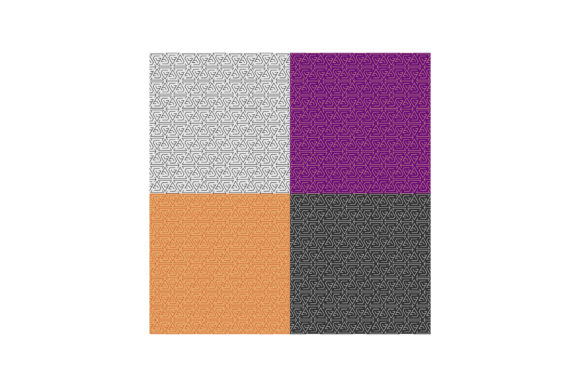
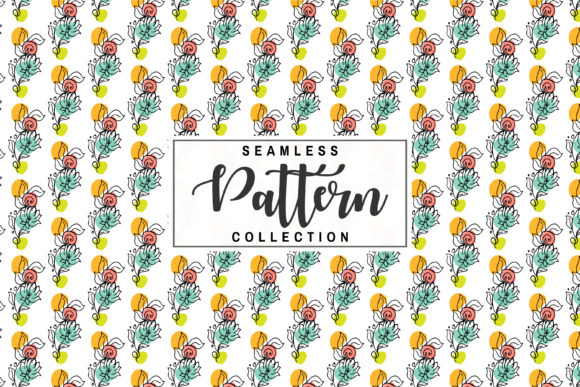
At its core, a seamless pattern is a tileable graphic—meaning its edges align perfectly so that when repeated horizontally and vertically, no visible seams interrupt the flow. What distinguishes a luxury seamless patterns design from a generic repeat is not simply the motif itself, but the sophistication of its construction. Scale, rhythm, negative space, and color modulation become critical. A pattern intended for premium applications often employs restrained palettes, subtle metallic accents rendered digitally, or layered transparency that mimics the depth of hand-pulled screen printing.
Consider the difference between a basic polka dot and a geometric repeat used in a high-end brand's packaging. The latter might feature mathematically precise spacing with occasional irregular intervals that feel organic, a muted gold-on-cream relationship that shifts under different lighting, or a motif drawn from archival heraldry that has been redrawn for contemporary relevance. These decisions are not arbitrary. They reflect a deep understanding of how the human eye travels across a surface and how repetition can either soothe or overwhelm.
Materiality Without Physical Materials
One of the most compelling developments in this field is the ability to simulate tactile richness in purely digital formats. Designers working with luxury seamless patterns now incorporate grain textures, linen weaves, watercolor bleeds, and foil effects that read as materially authentic on screens. This matters because purchasing decisions increasingly begin in digital environments. A pattern that feels flat or digitally sterile can undermine the perceived value of a product before a potential buyer ever touches it.
The implication for e-commerce brands is significant. When a luxury candle company applies a seamless botanical pattern to its website's editorial imagery or its email marketing headers, the pattern functions as a proxy for the sensory experience the product promises. The design borrows from the language of physical craftsmanship and translates it into the pixel realm. Done poorly, this translation feels hollow. Done well, it creates a cohesive brand atmosphere that subtly elevates everything it touches.
Why Attention Is Shifting Toward Intentional Repeats
The current interest in high-quality pattern design did not emerge from a vacuum. Several intersecting shifts have created an environment where this skill set carries new weight. The first involves the maturation of direct-to-consumer branding. As digitally native companies mature, they seek differentiation beyond logo and color palette. Pattern becomes a proprietary asset—something that can extend across packaging inserts, tissue paper, social media templates, and limited-edition collaborations without losing coherence.
A second factor relates to the growing sophistication of design tools. Software advancements have made complex half-drop repeats, ogee layouts, and layered transparency far more accessible than they were a decade ago. The barrier to creating luxury seamless patterns design has lowered at the technical level, which paradoxically raises the bar for what is considered exceptional. When the tools are widely available, the distinguishing factor shifts from technical execution to artistic judgment, cultural reference points, and an understanding of how patterns behave across different substrates.
The Quiet Influence of Hospitality and Interior Design Trends
Luxury hospitality has long been a laboratory for pattern experimentation. Hotel groups invest heavily in custom wallcoverings, upholstery repeats, and carpet designs that define the sensory identity of a space. These patterns rarely stay within the hospitality sphere. They migrate into residential interiors, influence stationery trends, and eventually appear in the visual toolkits of brands that want to borrow the same emotional resonance. The current lean toward warm minimalism and organic modernism has produced patterns featuring abstracted botanicals, weathered stone textures, and simplified classical motifs—all of which translate remarkably well into branding and packaging contexts.
What travels from hospitality design into broader commercial use is not literal replication but a sensibility. The understanding that a pattern should feel grounded, that it should reward close inspection without demanding attention, and that its luxury derives from restraint rather than opulence—these principles now inform how designers across industries approach seamless repeats.
Practical Applications Across Industries and Roles
The versatility of seamless patterns means they serve remarkably different functions depending on where they land. For a freelance surface pattern designer, luxury patterns represent a portfolio category that can attract licensing deals with fabric houses, stationery brands, and home décor manufacturers. The emphasis here is on technical precision and commercial viability—patterns must work at multiple scales, in varied colorways, and across products that the designer may never see.
For brand strategists and marketing teams, seamless patterns function as a connective tissue. A single well-designed repeat can unify packaging, digital ads, trade show displays, and corporate gifting. The investment in custom patterning often pays for itself through the visual consistency it enables across touchpoints that might otherwise feel disjointed. This consistency is not about rigidity; strong brands allow their patterns to flex—appearing at different scales, in partial applications, or in monochromatic variations that suit different contexts.
Educators and Content Creators Are Building Around Pattern Literacy
An interesting development involves the growing number of online courses, tutorials, and communities dedicated to pattern design. Educators teaching luxury seamless patterns design emphasize not just software proficiency but the development of a critical eye—learning to analyze historical pattern traditions, understanding the mathematics of repeat layouts, and developing an intuitive sense for when a pattern feels resolved. This educational ecosystem has attracted hobbyists who begin with personal projects and gradually develop commercial portfolios, as well as established designers seeking to add repeat patterning to their service offerings.
Content creators in adjacent spaces—such as branding educators, packaging design influencers, and business coaches for creative entrepreneurs—increasingly discuss pattern design as a value-added skill. The reasoning is practical: clients who need brand identity work often need patterns for their collateral, and a designer who can deliver both captures more of the project's value while maintaining tighter creative control over the outcome.
How Technology Is Shaping Pattern Creation and Distribution
Artificial intelligence image generation has entered the conversation around pattern design, and the implications are complex rather than straightforward. AI tools can generate repeating patterns quickly, and some outputs are visually striking at first glance. What these tools currently struggle to replicate is the intentionality behind a luxury-level repeat—the considered relationship between positive and negative space, the subtle adjustments that prevent a pattern from becoming visually fatiguing, and the cultural or historical research that informs motif selection.
Designers who work with luxury seamless patterns design are finding that AI serves best as an exploratory tool rather than a final production method. It can generate compositional ideas, suggest unexpected color relationships, or produce mood boards that accelerate the early stages of a project. The human judgment required to refine AI-generated patterns into commercially viable assets remains substantial. This suggests a future where pattern designers who combine traditional design literacy with technological fluency will be particularly well-positioned.
Digital Asset Marketplaces and Shifting Distribution Models
The marketplace for seamless pattern assets has matured considerably. Premium stock platforms now curate collections specifically positioned for luxury applications, with search filters for pattern style, color mood, and intended use case. This accessibility has changed how small businesses and independent creators source patterns—they can license sophisticated designs without commissioning custom work. For pattern designers, these marketplaces offer passive income streams, though the economics favor those who produce consistently and understand platform-specific optimization.
A parallel trend involves direct licensing through designer-owned storefronts. Using platforms that handle file delivery and licensing terms, independent pattern designers can build direct relationships with clients while retaining more control over pricing and usage. This model appeals particularly to studios and individuals whose work carries a recognizable aesthetic signature that attracts repeat buyers.
Practical Recommendations for Engaging with Luxury Patterns
Whether you are commissioning custom patterns, licensing existing designs, or learning to create your own, several guiding principles improve outcomes. First, invest time in understanding the context where the pattern will live. A repeat designed for a silk scarf behaves differently than one optimized for a website hero section. Scale, level of detail, and contrast ratios all need calibration based on the final application.
Second, study historical and contemporary pattern traditions without imitating them directly. The most resonant patterns often draw on diverse references—a motif inspired by Art Deco ironwork, a rhythm borrowed from Japanese textile design, a color relationship observed in a mid-century ceramic—synthesized into something that feels coherent and fresh rather than derivative. This kind of visual research distinguishes patterns that feel layered and intelligent from those that feel like simple decoration.
Third, when evaluating pattern quality, look beyond the single tile. Zoom out and observe how the repeat reads from a distance. Does it create unintended lines or clusters? Does it maintain visual interest without becoming chaotic? Does it reward sustained attention? These questions matter more than whether a single tile looks attractive in isolation.
Pattern as a Long-Term Brand Asset
Organizations that treat pattern design as a strategic investment rather than a tactical afterthought gain a compound advantage over time. A custom pattern, used consistently and evolved thoughtfully, becomes part of a brand's visual equity. Customers begin to recognize it in subtle applications, and it carries associations that deepen with repeated exposure. This is the quiet work that luxury seamless patterns design performs—building recognition and emotional resonance without ever demanding the spotlight.
The point is not that patterns are suddenly important; they have always been woven into the fabric of human visual culture, from ancient mosaics to Renaissance damasks to modernist wallpapers. What has shifted is the accessibility of the tools, the breadth of commercial applications, and the sophistication with which contemporary audiences interpret visual signals. A seamless pattern, when designed with care and deployed with purpose, communicates that someone paid attention. In luxury contexts, that message is often the entire point.